
- Category Architecture

The Standard Newspaper published an article on ‘Kenyan Architecture Looking for an Identity to call its Own’. It can be accessed here [Kenyan architecture in search of an identity to call its own (standardmedia.co.ke) ]
Emma Miloyo, the former President of AAK posited that more than 50 years on, we have no city or town which can be identified from its own unique architecture, more importantly, identifying with our own Kenyan culture. Has this changed in the last 5 years? Also, before much is said through the interrogation obtained from the Standard Newspaper Kenya correspondent, we may be guided by the former president’s further sentiments on the African Architectural cocktail that seeks to curtail the Kenyan Architectural detail. How then ought we to proceed?

The authority of the correspondent can collaborate with the respondents in finding the “Copy and Paste” culture as informed in furthering the discussion. But we must resist the notion or its quick departure to address sustainability before understanding the scope of how local structures ape from other regions without reflecting the reality on the ground. Therefore, regarding perceptions and misguided understanding of progress, our observation will be seeking to establish whether the responses obtained are conterminous with the subject matter through Iconism, Symbolism, Sustainability, Originality, Uniqueness, Identity and Healing.
A citation from Pritzker Prize award-winning architect Kere Frank is inferred upon in establishing the decidedly iconic. On account of materiality a convincing case is made for the maxims of Sustainability, Identity, Healing and Originality. What then of Symbolism and Uniqueness?

Symbolism and Uniqueness are key to inspiring a local architectural identity which according to Emma Miloyo is mostly dominated by Western and Asian designs that reflect little of Kenyan culture. The former president further avers that while conjuring the Kenyan culture in Architecture, circular shapes evoke the maxim of Iconism which, she is also quick to point out, is a universal of African Architecture. She goes further to state individual buildings whose Identity is complete with the presence and essence of circular shapes. Here we may authoritatively affirm our observation. That, the circular shape, as a universal of African Architecture, gives Kenyan Architecture its Identity.
Concluding by citing the KICC, the Boma Hotel, and Don Bosco Church in Upper Hill, Her principle parameter of they being Icons, with an emphasis given to the KICC, is their successful deployment of a Symbol of Kenyan Culture and hence Identity; The African Round Hut.But she sums it up by noting that Kenya has never had a specific identity in architecture as it is in other parts of the world. The Architecture in practice, she opines is one, which does not reflect a multi-cultural Kenya and is devoid of our own Kenya bearing.

Now, we obtain from the Former President of AAK that the African Round Hut is a universal SYMBOL of African Architecture and therefore Kenyan Architecture. Fulfilling the Maxim of Symbolism, it goes forth to set out universal scale for establishing the other maxims.Its[Symbolism] presence establishes the maxim of Identity and which then leads to Iconism as established from the essence of Cultural Originality and Uniqueness.
Moving forward, further Correspondence from the Chairman of AAK , Architect George Arabbu looks at the proposed Konza city as place where the lessons reflected by Miloyo can be practicable as espoused. How then can Konza City embrace an architectural philosophy that espouses the presence of [Symbolism] that establishes the maxim of Identity and that leads to Iconism as established from the essence of Cultural Originality and Uniqueness?
While agreeing with Miloyo, that what we see in most of our designs is absolutely not Kenyan, Arabbu feels the solution lies in bringing out the real Kenyan identity is by indigenous architect being brought on board helping in coming up with what looks like Kenya. Affirming responses that the “copy and paste” has robbed Kenya its identity particularly in mega projects that ought to represent what Kenya is, he avers that they is no Kenyan Architecture representation in what is coming up in the country.

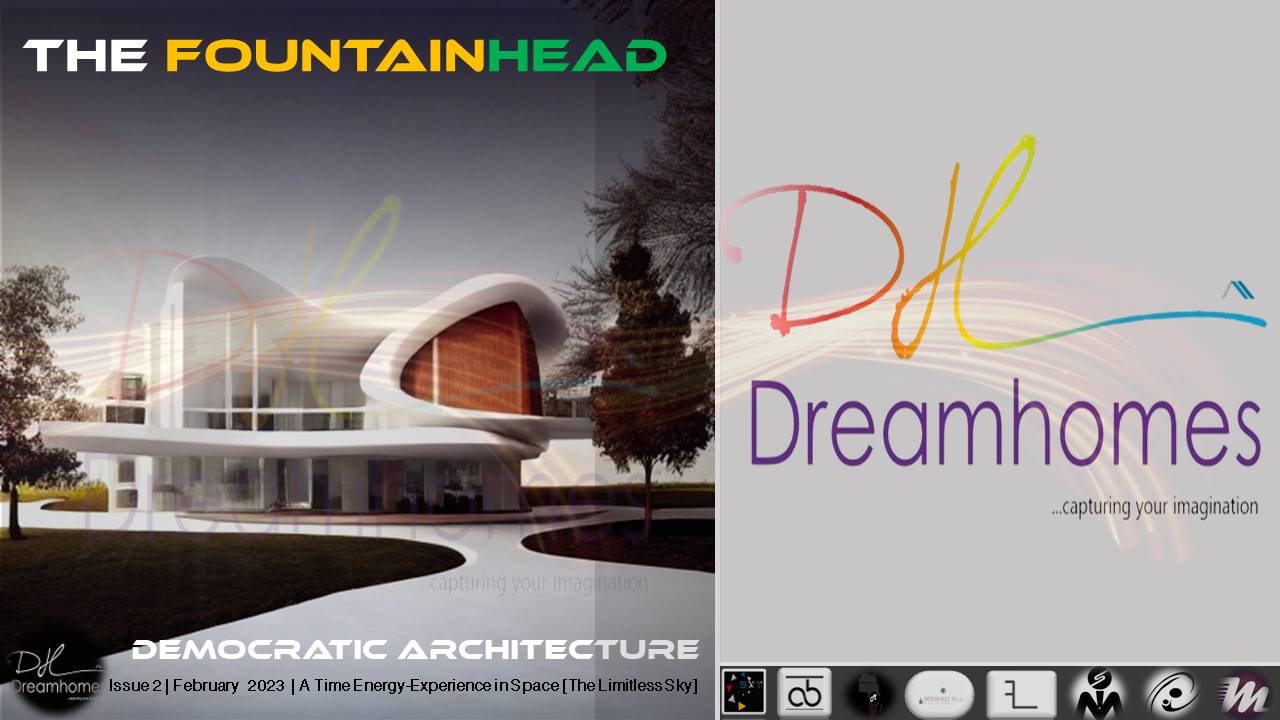
Public Participation, he feels, ought to be a key component in determining Kenyan Architecture. In a bid to “democratize’” architecture, the architect proposes the use of a voting system to competitively determine Kenyan Architecture. While opining that this will capture Kenyan Imagery in future, he believes that Kenyan place-making and placessness ought not be confused with any other or their products.
How then can Kenyan Architecture embrace an architectural philosophy that espouses the presence of [Symbolism] that establishes the maxim of Identity and that leads to Iconism as established from the essence of Cultural Originality and Uniqueness? According to Arabbu, architectural identity comes with colour, architectural character in shapes sizes of buildings,which is all a product of proper background planning & Kenyan architects have not lost opportunity to present to the world a purely Kenyan product made for Kenyans.
Now we may endeavor to reconcile our observations on architectural identity. What principles[maxims] ought we establish in determining the color and the architectural character in shapes sizes of buildings in achieving a Kenyan architectural product? Can Kenyan Architecture embrace an architectural philosophy that espouses the presence of [Symbolism]that establishes the maxim of Identity & that leads to Iconism as established from the essence of Cultural Originality & Uniqueness determining color & architectural character?

To answer that question we may as well ask ourselves whether modern architectural styles ought to make it hard for many to notice the Kenyan themes in buildings when communicating and interpreting Symbolism, Iconism, Identity, Originality and Uniqueness of Kenyan and character? A contrast will be necessary. To understand Contemporary Architecture, we must comprehend the revolution of modernism and the evolution of post-modernism. What then is Kenyan Contemporary Architecture?
The Revolution of Modernism and the Evolution of Post-Modernism; Contemporary Architecture
Maybe you are still searching for a proper distinction? Well, let us make a summary that can help you with that, perfect though it may not be, using Contemporary Architecture being a present conflict of modernism’s abandoning tradition [on]for post-modernism to assert its originality while adding tradition. With that pair of the Original and Traditional it [post-modernism] sought with attention to detail why less is more is a bore through its appositeness to enriching the architectural character in elevations, plans and interiors of built forms creating an impression of criticism without alternative, for some, to the pure and flowing looks of form follows function.

Functional Form
While maintaining the original tradition of detail, post-modernism emphasized on evolution rather than revolution of architectural styles and theories.
Purpose with Need
Achieving continuity requires the presence of the original in any point of expression. While it is true that the need for architecture is housing the physical, but its purpose goes beyond.
Contemporariness of Post-Modernism
By integrating form and function, Post-Modernism affords the architect the liberty to assign the Machine and Computer the Traditional in pursuit of presence of originality in any event of time.
Towards Democratic Architecture: FRANK LLYOD WRIGHT
Rallying Architects to Modernism, the founding father who was also the father of the skyscraper, Louis Henry Sullivan invoked the maxim of form follows function. By the time his student had become great, he was of a different opinion through practice, that form and function are one.

Organic Architecture
Acknowledging the increasing role of machines in future constructions, he endeavored to connect the buildings with nature a tradition that is observed in most cultures and presently rallied as sustainable and environmentally friendly design. But it is through his advocacy of architecture that promotes individual liberties in appreciating the Science of Nature, Art of Humanity and the Essence of Science/Art that he sought the place of tradition in architecture[ as an inherent product of society] in Dissolving cubic rigidity, Destroying the façade idea the house was united with the landscape. Moving to the “New & Native” Architecture FLW experimented with the maxim of Originality. Architecture, at least visually therefore, showcases the philosophical underpinnings and cultural orientation of any society. Consequently, in following tenets of democracy, an architectural style is more successful if it articulates egalitarian principles particularly in domestic architecture as opposed to brutal altruism in modernism.
DESIGN & BUILD! MATERIALS + TECHNOLOGY AND SKILLS
ARCHITECTURE AS THE KEY TO SPACE: SCALE AS ITS LOCK
Design Revolutions and Creation Evolutions
Design prefers gathering opinions from nature while creation refers to its facts. But in seeking the soul of Architecture we must realize it before actualizing it in Functional Form by meeting the needs for architecture while claiming its purpose. Put in other words, Architectural needs are met by means (Technology, Materials and Skills) on their way to completion (Purpose).
Whether one looks closely, it will still be hard to locate African [Kenyan] Architectural themes in a purely altruistic modernism style while claiming the universal [function] or in Post-modernism [functional form]. When we look and see the universal do we feel it? Can function as a universal be Kenyan?
When interpreting human needs, function remains the main means of obtaining architectural purpose. Culture however must inform spatial settings and configurations. Architecture that wanders around for wonders should not forget to ponder into the yonder of its essence from presence. Modernism cannot reject evolution of forms from nature, only to project them without nurture. That it will rather claim originality by ignoring the traditional of native forms which were actually derived from nature.

Modernism cannot make us to feel what we don’t see. In other words, it tries to make us feel what we don’t see by regurgitated abstractions of originality without tradition. The modern feeling will always miss traditional architectural character in its designs which contemporary architecture determines through a post-modernist’s designs. While Function as a universal is also a mean for spatial concept-formation, it is more relative to architectural needs [perceptions] and not architectural purposes [conceptions] in their objectivity to existence. Therefore, when checking the essence of Kenyan Architectural themes in any presence, you ought to feel a concept-formation of a functional form enriched with Kenyan consciousness and identity. To aim to claim that modernism prescribed itself forms from its functions, is to proscribe concept-formations of that which ought to be by individual but integrated elements [Presence of essence] as opposed to common but differentiated elements [Presence without essence].

The essence of presence therefore is the unified pluralism through, Originality, Symbolism, Identity, Uniqueness and Iconism as expressed in functional form in any tradition and culture of our time. The essence of absence defines modernism as our response towards our art and science upon gaining new Technology, Materials and Skills. Post –modernism then goes forth to reconcile these responses to sustainability and healing by recalling tradition and culture of our arts and sciences. The opportunities of modernism inform the possibilities of post-modernism when reconciling our responses particularly through Poverty Eradication, Water and Sanitation, Affordable and Clean Energy, Industry Innovation and Infrastructure, Sustainable Cities and Communities, Responsible Consumption and Production, Climate Action.